
Press Releases
The bathroom as a retreat
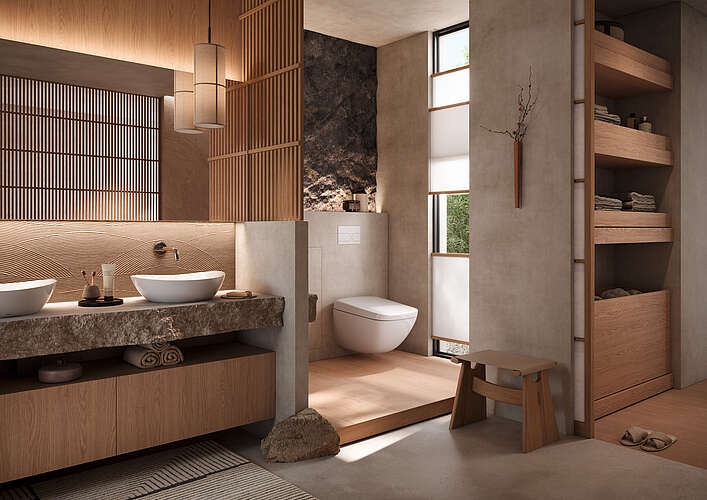
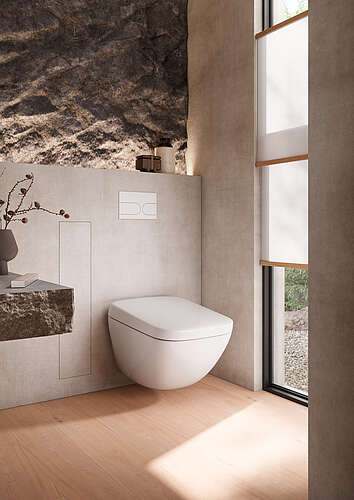
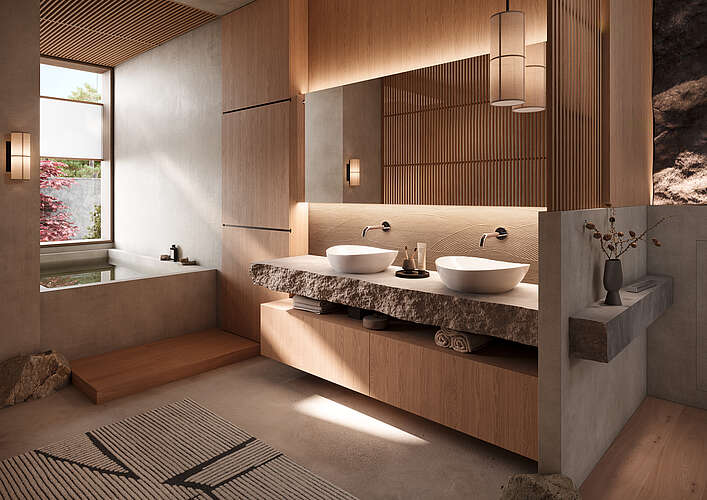
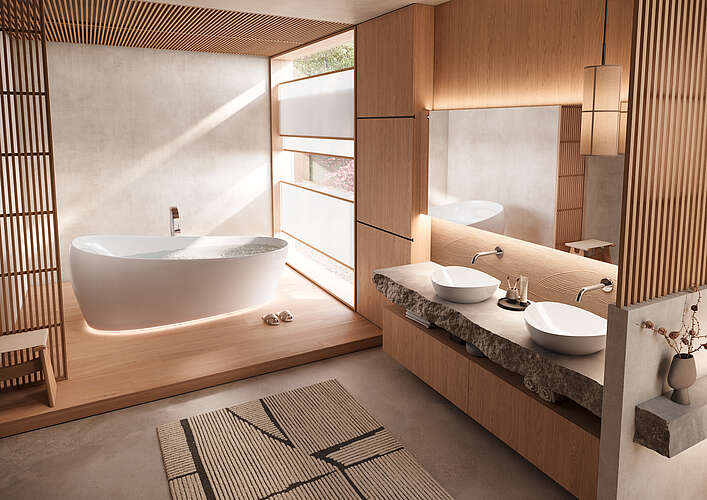

When many people visit Japan, they return with a fascination for the country’s design culture. This focuses on incorporating a sense of calm, clarity and attentiveness into everyday life. TOTO explored how principles of Japanese bathing culture can translate into modern bathroom designs – whatever the room size and budget – in collaboration with Flora Immler, an expert in Japanese interior design. The result is a vision of the modern Japanese bathroom that brings together cultural influences, contemporary interior design and exceptional comfort. TOTO products reflect all these aspects, especially the bidet toilets (WASHLET) and Flotation Tub.
Japan is an inspiring place. Travellers to the country experience architecture and design that effortlessly exudes peace, clarity and sensuality. Minimalist and streamlined, spaces balance lighting, materials and proportions to create atmospheres that leave a lasting impression. This approach is especially effective in the bathroom. Japanese sanitary manufacturer TOTO joined Flora Immler, founder of studio ukiyo, in exploring how to translate the qualities of a Japanese-inspired bathroom into European interior designs.
Spaces that make everyday life disappear
Japanese interior design expert Flora Immler finds the impact a space makes to be the most important consideration: “People should feel relaxed in the bathroom.” Especially in this time of constant overstimulation, the bathroom is becoming a more important place to just get away. Consciously experiencing this space is at the heart of Japanese bathing culture.
The design uses materials, lighting, transitions and proportions to make the stresses of everyday life fade away for a few moments. Open space in itself also holds meaning. The Japanese principle of “Ma”, the beauty of an intentionally empty space, shapes Flora Immler’s work. “Empty space also serves a purpose in Japan. This “Ma” principle greatly influences my design work,” she explains.
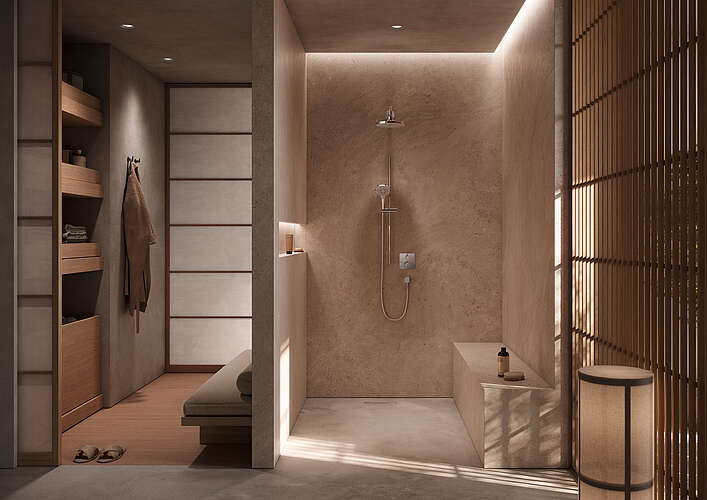
The concept she developed with TOTO translates this mindset into a timeless design aesthetic. The design incorporates natural materials like wood, stone, lime and clay plaster, as well as washi paper to provide privacy. Warm, natural tones, indirect lighting and intentional contrasts simultaneously create a feeling of safety and clarity. A variety of materials, pedestals and different types of lighting mark transitions between individual areas, lending structure and depth to the space.
A welcoming architecture
One main aspect of the design is the special emphasis it places on welcoming someone to the space. Even the entrance to the bathroom feels like a transition to a different world, one far away from everyday life. The main room offers generous views of the outdoors. Natural light, soft shadows and a view of the garden bring the nature inside, transforming the atmosphere of the bathroom over the course of the day. The rooms shown in the following pages are an ideal interpretation of this idea.
It’s also possible to create transitions, zones and welcoming moments in smaller bathrooms by using lighting and materials, and by structuring the space accordingly. The quality of the design is more important than the room size.
Japanese rituals for the bath
Japanese bathing culture follows a defined ritual. The first step is a shower or complete cleansing of the body. The bath is next, providing warm water for rejuvenation rather than hygiene. The bathtub is the heart of the bathroom, a representation of calm and intentional relaxation. Originating in Japanese onsens and public bathhouses, this tradition still shapes how people use the bath today.
studio ukiyo’s vision envisions a streamlined, minimalist pool for this bathing ritual. It’s possible to replicate this idea with one of TOTO’s bathtubs. Sophisticated technologies like Zero Dimension allow the body to relax fully, which is essential for a comfortable bathing experience. TOTO’s Flotation Tub, for example, uses specialised jets for an innovative massage feature that reaches and relaxes even the deepest muscle groups.
Bidet toilets belong to the modern Japanese bathroom
TOTO’s bidet toilet, WASHLET, also brings comfort and well-being to the bathroom. Around 75% of Japanese homes have bidet toilets. With its hygiene and comfort features, including intimate cleansing with fresh water, the bidet toilet is as common to bathrooms in Japan as a sink or bathtub. This is also reflected in its design. Like other TOTO products, WASHLET easily blends into the surrounding architecture with its understated, timeless aesthetic. Flora Immler also appreciates this subtle approach to design: “Everything TOTO makes is functional and very intentionally designed. The products focus on what’s absolutely essential.”
Quality stems from clarity
It’s possible to apply the principles of Japanese design to rooms of every size. Especially compact floorplans invite people to focus their design on the essentials. By prioritising functionality, planning carefully and using lighting intentionally, you can create the feeling of space in just a few square meters. “Bathrooms definitely benefit from setting clear priorities and having a less-is-more approach,” she stresses.
Most importantly, the individual elements should coordinate well with each other. Lighting, materials, proportions and the structure of the space combine to lay the foundation for a cohesive atmosphere. “It’s usually the carefully considered details that transform a space,” Flora Immler explains.
This is how you design a bathroom that does far more than its intended function. It’s a place for regeneration in which architecture elevates everyday life. Japanese bathing culture shows how natural materials, minimalism and intentional design can produce extraordinary spaces.
Three questions for studio ukiyo founder Flora Immler
1. What makes a Japanese-inspired bathroom so special and unique?
“The atmosphere. A good bathroom conveys a sense of calm and comfort. It’s all about the lighting, materials, proportions, and the question of how a room feels. I think that quality stems from the interplay of all elements, not individual highlights.”
2. Is it possible to put these principles to work in small bathrooms?
“Absolutely. Smaller rooms in particular benefit from clear decision-making. You can create a serene space where people feel comfortable by prioritising functionality, cleverly organising storage, and using calm materials and lighting. Limited space can often inspire well-designed solutions.”
3. What does authentic Japanese design mean to you?
“Authenticity is the result of clarity, minimalism and material integrity. It’s about creating spaces that focus on people and exude a sense of calm. I’m less interested in style than how a room feels and the contribution it can make to people’s everyday lives.”
Flora Immler’s tips for designing a Japanese-inspired bathroom
“Intentionally streamline your design”
Carefully selecting a few elements creates a calmer, more spacious environment than a lot of decorative details.
“Use light as a design element”
Warm, indirect and dimmable lighting shapes the atmosphere and calming impact of the space.
“Combine natural materials”
Wood, stone, clay and lime plaster make bathrooms feel warm, distinctive and timelessly elegant. If it’s not possible to use natural materials, high-quality decorative elements can also evoke a calming and serene impact.
“Design transitional areas”
Use different materials, pedestals, nooks and different light temperatures to define spaces and create depth, even in small rooms.
“Think holistically about comfort”
The best Japanese-inspired bathrooms combine aesthetics, functionality and well-being. Exclusive fixtures and furnishings like bidet toilets elevate this experience even further.


